Digging Drinking and Droning

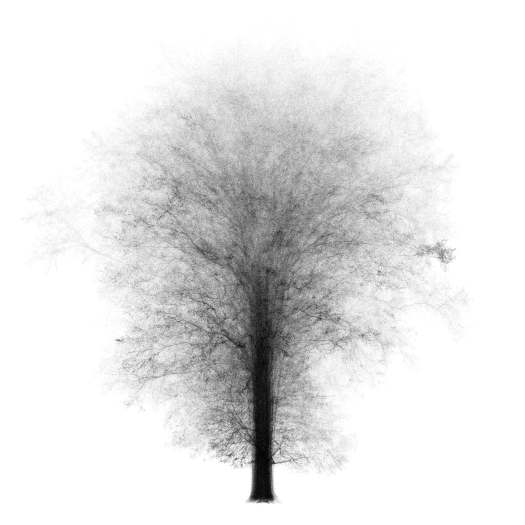
Allow me to introduce B-5. That is the name of our tree, perhaps not our One Tree, but the tree we are most interested in for now. Its tall and sturdy above ground, but the unseen  – whats below the bark and underneath the soil has been a mystery. By following the root, from root flare at the base of the tree trunk out until we reach the end of the root, we can observe the extent to which tree canopy has any correlation to root spread.  This is an experience of slowing down time – many hands and many hours later, the one tree root is still not exposed. Could you imagine the entire allée coming down by man power only? No machines, just simple hand tools and shovels to relieve the trees from their medium. This is a process of upheaval. While we are engaging with these trees as a living laboratory, we are also participating in the unhurried disassociation of a tree and its environment. Every hole, every accidental slice of a root, every footstep that increases soil compaction affects this tree’s next calculated measure to prepare for its steady future. Does it know it does not have a future?

Anonymous


The Allée Ballet

section-animation

A moving section through the allée from east to west. As the ground slowly rises, the ghosts of people and cars flash in and out of existence, while overhead the watchful trees explode like fireworks, all in a carefully choreographed display of shifting, moving, pulsing, life.

Root brain

lyford_root-system_flipped
Lyford & Wilson. Harvard Forest Paper No. 10. (1964)

Trees are in constant, foraging exploration through their roots. Darwin’s was a “root brain” hypothesis—a human metaphor that yet acknowledges a sort of decentralized command via the root’s tip. Or imagine instead “every organ of intentionality [in a tree] playing the role of a parallel processor.” The foraging root is thereby a device of the tree, independently cued by feedback to seek out nutrient-rich environments.

Roots are hypersensitive to context,  hyper specific to place. Soil hardness, stones, light penetration, temperature, invertebrates, distribution of water, minerals, gases…all play a role in stimulating the root tip to develop structures to recover its optimal conditions.

A tree’s placement of roots is non-random and deliberate: intentionality expressed by its growth movement toward optimal patches of nutrients, in turn expressed by “modular growth and phenotypic plasticity.” Shortening and intensification of branching structure when resources are abundant, lengthening and moderation when they are not.

Its tree intelligence becomes clear.

(Reference:  Marder, Michael. “Plant Intentionality and the Phenomenological Framework of Plant Intelligence.” Plant Signaling & Behavior 7, no. 11 (November 1, 2012): 1365–72. doi:10.4161/psb.21954.)


The Hatchet

TheHatchet.jpg

In 1906, one year after the first and only Tree Planting Day on the WashU campus, the University Yearbook adopted this logo.

An incredible day today in the University Archives and Special Collections. A complete privilege to be paging through the original Olmsted campus plans, the adopted Cope & Stewardson plans, the failed campus competition entries, and the early 20th century tree inventories. Special thanks to University Archivist Sonya Rooney for her introduction to the collection and invaluable assistance.

Certainly more to come….

Yesterday and today

pierrehuyghe_rings
Pierre Huyghe, Timekeeper, 1999
A highly site-specific work by Pierre Huyghe, who we’ve admired in class in other contexts. It’s a wall sanding through layers of paint to the wall surface…thereby providing a window to read the passage of time–and from a flat surface! But isn’t it strange to think that if you perform this operation on a tree, rings are exposed that reveal the same passage of time as from a cross-cut section, if you were able to go all the way to the center…? (Although right,  not the whole ring as it was formed) An ongoing consideration is how our conventions and tools dictate the kinds of information we receive, and how we receive it. This is an inversion, or a 90-degree turn, in any case, that challenges what we think we know about how to know and measure a tree–if you know what I mean…